

Its wild to think we are now a quarter of the way through the 21st century.
That once shiny future is now a turbulent past, and a fragile present. As 2024 draws to a close, it’s another year that music has provided some shelter from all sorts of horrible stuff happening around the world. The hangover from a pandemic we never quite managed to shake off, wrong on top of wrong in the middle east, the war in Ukraine, the ongoing migraine that is Brexit, the rise of the idiots, and crowning it all off – the vomit inducing return of that orange sack of shit in the US.
Throw in all the normal challenges of life, and things can feel like a balancing act between speaking out, whilst being fortunate enough and grateful to hide somewhere rural and peaceful. The forests and trails, the joy of a wild garden, the curtains, and headphones all easily in reach, and effective means of escape into more creative and happy places…
As always, our end of year list is more of an overview of what we’ve loved, an expansion of the music we’ve reviewed here, or featured in our monthly CAMP mixes. It’s less a catalogue of music that’s exclusively been released in the last 12 months, more just what’s soared above the noise, or completely ensnared us.
Our deep dive into music that was ever-present in 2024…
THE INFINITE LOOP OF CATHERINE CHRISTER HENNIX
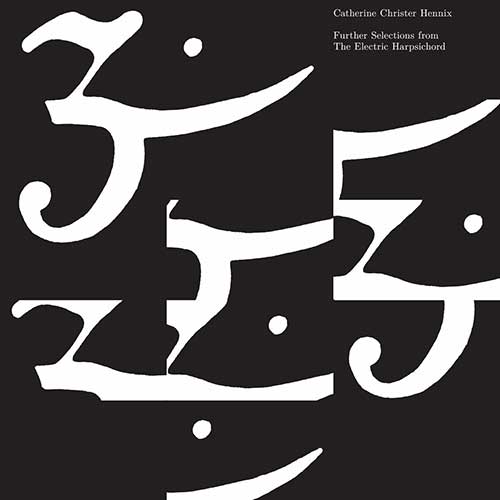
Last year, Catherine Christer Hennix released Solo for Tamburium, which was our album of 2023. An album that blew us away, firstly as another awe-inspiring adventure that felt like bouncing around inside beams of energy hurling through deep space. Then a few months later, that music morphed into an elegant sign off towards the infinite, at the news of her sad passing in November.
One of our all-time favourite musicians, gifted the world a small but immaculate discography, her music positively fizzes with ideas. A space that draws a line between mathematics, and a deeply spiritual zone. Perhaps the easiest way to understand her work is via the fact, she was also a mathematician, specialising in an area called ultrafinitism.
By its very nature, this branch of mathematic philosophy is difficult to simplify, it draws on the idea that large numbers actually reach some sort of limit. It seems, simply adding 1 to any number doesn’t actually work every time. Quite how this is achieved or helps, is beyond my own grasp, but it at least provides a tangible framework to another of her other passions – music.
In a very basic way, her music feels like a proof of concept models to her mathematical ideas. Aspects of sound like tuning, proportion, duration, instrumentation, and content help to construct a sonic world that expands into a vast universe in any listener’s brain.
This new release, sanctioned by Hennix before her passing – Further Selections from the Electric Harpsichord however, is yet more crystalized genius. Whilst it’s not absolutely clear, this version seems to be an extended, alternative and higher quality recording of the 26-minute version The Electric Harpsichord released back in 2010, both captured in Sweden in 1976.
Further Selections from the Electric Harpsichord is an unbroken 47-minute swirling, pulsating psychedelic wormhole, that comes alive every time you hit play. Too complex to simply be described as a drone, it’s a mass of pulsating notes, all sparkling and rippling like clusters of atoms around a core of sound, continually supported by newly emerging shards of light.
Far from a gelatinous blob, Further Selections from the Electric Harpsichord never loses that sense that it’s a simple form, made of endlessly regenerating and detailed parts. Music, that at times, has felt like it’s actually filling whole rooms in sparkling energy.
This album is the final part of Hennix’s story. Whilst that’s another form of sadness, the fact the end point opens another whole galaxy that grew out the very start, is incredibly fitting. A loop where everything is amazing.
Further Selections from the Electric Harpsichord is released by Blank Form Editions and is available on vinyl, CD and digitally here and here
Read our reviews of her previous albums:
The Deontic Miracle | Selections from 100 Models of Hegikan Roku
Catherine Christer Hennix | Selected Early Keyboard Works
Catherine Christer Hennix | Blues Alif Lam Mim In The Mode Of Rag Infinity/Rag Cosmosis
FRANCE, FROM FRANCE, AND OTHER FRENCH MUSIC
Music from France, particularly when considered in our favoured, more experimental and adventurous terms, remains a nation packed with gems. A brief and idealised historical flythrough might name check GRM studio, Elaine Radigue, Jean Claude Eloy, Jean Claude Vannier, the Pôle label, the orchestration of Gainsbourg’s Melody Nelson, but no surprise – France in 2024 is still a spiky and radical hotbed of amazing things.
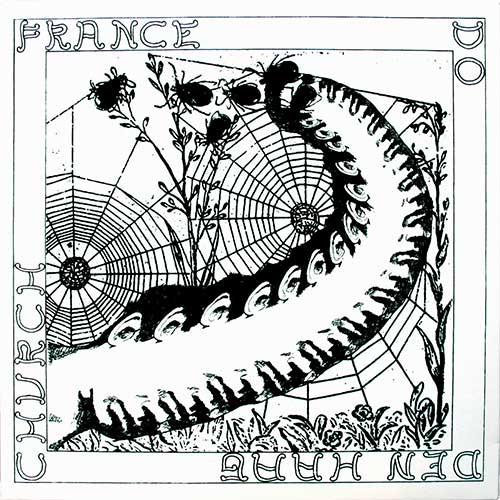
Perhaps headlined by the rather confusing directly named France, a blistering 3-piece drone band (drums, bass guitar and hurdy gurdy!), founded in Valence, over time we’ve slowly discovered labels, bands and artists brimming with ideas in a more contemporary framework.
France (the band) seem to have a simple strategy. Knocking out thumping live mantras that lock in, and zone out for as long as the band can hold it together. A growing stack of one-track albums, each a document of a gig where this routine was revisited and rebirthed. However, each set quickly aligns into an engrossingly unique take on brain popping howling minimalism, the characteristics of the performance space, the quality of the soundboard, the energy of the room, that feels like an ongoing sweet spot between Les Rallizes Denudes, Sister Ray, Tony Conrad and Faust…
Do Den Haag Church remains our favourite, but Pau, Meltdown on Planet Earth, France à Tarnac or À La Recherche De La Flexitude Du Temps, all feel every bit as potent for anyone looking where to start. Just be prepared to get a bit obsessed!
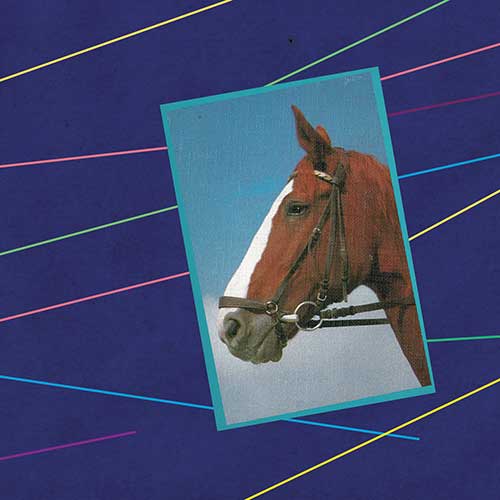
Another band Tanz Mein Herz, explore a related space to France, here the driving rhythm is replaced with more folk-tinged atmospherics, which occasionally gets dusted in electronics and effects. Une aute dec Territory, as the title suggests, is a rerun of their first album. Whilst the original Territory is a great listen, the revisited version finds new edges and spaces in the soup. Au Brégançonnet (Blanc) is a barefoot hippie groove that slowly gets embalmed in deep flanging electronics and space.
Quattro is a huge double album that enjoys its extended footprint building up in thick drones that become saturated with other elements that slowly rise and fall over the horizon. Tracks like the 27-minutes of Spiegel Haus become completely hypnotic as they expand into ragged tendrils. Every album revisits ideas and themes, live recordings that presumably use existing elements as frameworks for new interpretations. The latest album Redux, released earlier this year, feels like a subtle shift towards mellower sounds, only adding to their uniquely confusing mess of finely balance drones and heady zones.
This year, Tanz Mein Herz guitarist Pierre Bujeau also released the stunning Au Royaume De Pacheco which we reviewed here.

Perhaps the wildest of these discoveries however is Moineau Écarlate. A mysterious solo tape project that delights in fairly brutal textures, and how they animate and blossom, when looped and sculpted into various new forms.
Simple repetition is an easy way of creating rhythm but across the four albums, so far, we’ve dived into – Soliloque de l’oubli, Avaler des couleuvres, Les nœuds lunaires, and Junkopia, have all been hugely worthwhile. Packed with noisy and ugly shards of broken sound, that then somehow suck you up into a surprising subtlety and beauty at odds with itself, and any preconceptions you may have.
RICHARD TEITELBAUM’S MIND BENDING SOUNDTRACK
Oren Ambarchi’s Black Truffle label remains an easily accessible, and hugely vibrant way of spotlighting things worth listening to. A superb ongoing resource for anyone interested in adventurous music. Whilst new music is always amazing to hear, we admit it’s often particularly thrilling to hear music that’s been lost in time or truncated by tiny and long inactive labels. David Rosenboom’s Future Travel was one such a feast of riches, a unique take on electronic music, expanded from its 1981 release, into an even stronger, and stranger new edition this year.
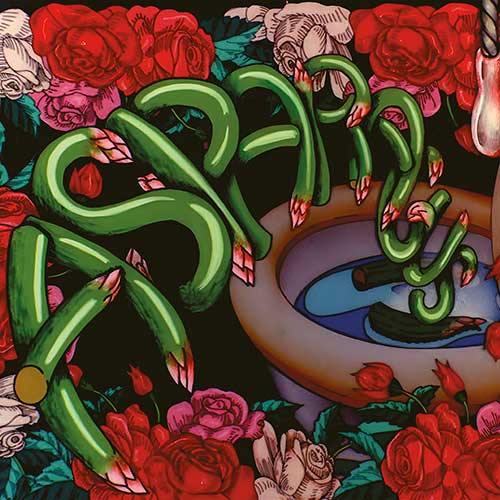
However, another release, that hit the hardest was Richard Teitelbaum’s Asparagus. Whilst the visual component – Suzan Pitt’s staggering animated film immediately became a cinematic all timer here, separated from the visuals – this double LP soundtrack, which includes additional material, isn’t weakened one bit. It has never failed to affect me deeply.
A vast out-of-focus mixture of Moog modular and Polymoog, accompanied by the dreamy fog of sax, trombone and violin that somehow transports me back to my childhood. Those pivotal times where the strangeness and power of art and music convinced me, this was to be a deep fascination for life. The out of body experiences of Yellow Submarine or hours staring at the sleeve of Jean-Michel Jarre’s Équinoxe. Decades later, I’m back in that headspace – a whole experience constructing a psychedelic one, requiring nothing more than air and attention.
Months on, and hundreds of listens later, Asparagus remains deeply evocative music, although what it evokes remains a complete hallucinatory mystery. A beautifully odd form of amazingness.
Read our full review of Asparagus by Richard Teitelbaum here
PSYCHEDELIC ROCK MUSIC BY DEAD LUKE
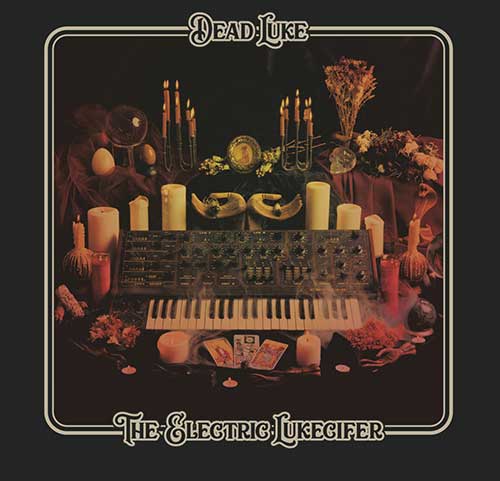
Following various suggestions, you might end up on a Bandcamp page that is completely by chance – no names are familiar, on a label you’ve never heard, celebrated by people you are unaware of. You play a track or two and make some decision to purchase, based on those few moments, if it ticked any boxes in your ever shapeshifting criteria. However, our random formless dives into Bandcamp do seem to have a pretty high success rate.
One recent find is Dead Luke, and over the course of this year, 4 of his albums have regularly roared out our speakers. Whilst we are still trying to find his debut American Haircut, Jackson Vanhorn’s project Dead Luke undeniably centres on Spacemen 3 shaped stargates, clearly homages of sorts, but still bristles with their own distinctive druggy and droney grooves.
Tracks like Endless High from Meanwhile… In the Midwest is a 14-minute-long masterclass in a slowly unfurling fireball. Chiming, clanging, gradually corroding into forms that seem impossible to play loud enough. God Takes LSD is a continuation of this format but peppered with layered electronics, and a glorious mess that never fails to duck and dive in engrossing ways. Tumbleweed Bong Rip from Hazy Visions of Bliss does what it says on the tin. Three connected sections that take that strummed groove, keyboard and synth and gently erupts, as your eyes pinken.
His most recent album – The Electric Lukecifer is possible the most uneven release so far, but is front loaded with a tune that should be way better known than it actually is. The Groovy Hand of Fate, is an 8-minute long psychedelic smash hit. Build around another irresistible groove, encrusted with suitably trippy lyrics, it veers off into an extended keyboard, then guitar solo, that bubbles and melts all in its wake. Finally, the song triumphantly comes full circle, and by this point it’s all too late – it’s seared into your brain forever.
Sometimes a bit of psychedelic rock music is all you need, and whilst the genre is full of music that missed the brief, Dead Luke offers a perfect blend of the familiar and new.
TRAVELLING ALONG LIGHT BEAMS WITH RAFAEL TORAL

It took just 90 seconds to confirm Spectral Evolution as a monumental release.
A nebulous oily orchestral swelling, the ghost of trumpets, foggy harbours, deep oceans, organs, guitars, twisting into a burst of pure beauty. The colours of Van Dyke Parks, the shapes of Jim O’Rourke’s Eureka pushed through a prism of white light. A minute and a half long primer that somehow felt like the most concentrated, passionate and beautiful Toral had been in 3 decades of music making. Everything finally aligning. The remaining 45 minutes would simply need to somehow not lose sight of this opening moment to become something approaching perfect.
It was never in doubt – what unfolds from here, is the sound of a slow pan through pure columns of joyous sound, that never feels or sounds the same twice. It’s a living drone, it’s the sound of lushness, science and patience. A world that every listen unfolds into yet another stunned and uninterrupted playthrough.
Several reviews connected the sleeve photo of a great tit, suggesting a relationship between the music within and bird song. Whilst it’s conceivable to imagine the electronic chirping is that of a bird, it’s never really felt like a satisfying link, somehow too literal. However, in messages with Toral he revealed the image was simply a moment captured in time, and of freedom – the second before the bird moved on.
What however was also interesting, as someone that nerds out on all the details, is that with a bit of research, revealed the great tit also does something beautifully fitting and somehow relevant. Almost unique in the bird world, its young hatch with the same colouration as the adult. The feathers of the nape of the youngster’s neck reflect ultraviolet light which the parent can see. This either making it easier for spotting the young in low light or to indicate health. This little patch disappears at the first moult two months later.
Whilst this is very much an oblique and unintended reference, the bird illustrates that sense of there simply more going on here beyond the surface. The title – Spectral Evolution, frames colours and ghosts, and is exactly that, making the invisible visible, another realm that is present and operating within reality. A whole album constructed with a complete understanding of sound, which solidifies as both phenomena and art. Hit play and be instantly transported to another layer in the ether, which builds like a lysergic staircase, permeating and sprouting though every atom of sound. Dazzling, the sum of real effort, experience and obsession, all perfectly realised.
Toral’s huge discography is littered in the spectacular but Spectral Evolution is the absolute peak in his decades of beautifully realised creative curiosity.
Read our full review of Spectral Evolution by Rafael Toral here
Read our reviews of his previous albums:
Rafael Toral | Aeriola Frequency (our album of 2020)
Rafael Toral | Moon Field
ROLAND KAYN IS FOREVER

Whilst Roland Kayn, Autechre, The Vitamin b12, The Fall, Les Rallizes Denudes, La Monte Young, and a few others are not regularly grouped together, it would be possible to pretty much live your life exclusively submerged in each of their sonic worlds. Artists that all generate music that either showed, or continues to show no logical place to enter or exit – just unique endless sweeps through their self-contained realities, accumulating in dozens of albums, days of ideas and whole lifetimes of music.
Roland Kayn, is in our opinion, the top of any such pile, and his music is my direct route to an excited and singular form of ecstatic brain fuzz. Music that, so far, is impervious to familiarity, sounds like nothing else, that deals in things that haven’t even been dreamt of elsewhere. When it’s his music that you’ve opted to play, the jolt when you eventually move onto something else, by anyone else, is like a having to recalibrate your brain and ears.
Despite writing more words on this site about his work, than any other artist, I still feel completely unable to unlock anything about his music. That immediately recognisable scouring, swooshing agitation, those millions of fragments pushing and pulling, the shadows of infinite layers, the outline of orchestras, the throb of a constant unknown. The accumulation of all those mysterious and impossible processes all offered in a way makes you pinball around in a vast and cavernous abstraction.
The cybernetic aspect of his work perhaps suggests some early analogue version of AI. In a way it may well be, but somehow in all of this, Kayn’s absolute obsession with sound is always impossibly dusted with human curiosity. This isn’t the machines helping us do something that we could achieve anyway. It’s the machines literally shredding anything Kayn cared to feed them. What happens when you fed this? The material goes in, is squeezed through the ‘machine’, but what comes out the other side is always more than less. Normality isn’t this wild – this is the very edge of chaos organised.
Earlier in the year, I was fortunate to track down a vinyl copy of Simultan which I’d always been particularly excited to hear. Being part of this later day wave of interest in Kayn, what’s always been fascinating is that we’ve been moving backward through all those landmark recordings. A Little Electronic Milky Way Of Sound, the most vast, dense, unwavering and most recent of his works, then huge varieties of textures and drone of Scanning, the twisting agitation of Tektra, the corkscrewing rhythms and dynamic abstraction of Infra (which we said ‘might just be the best thing we’ve ever heard“). Simultan however is Kayn’s earliest related work and as expected, revealed the most about the sounds he builds with, in their purest forms. Whilst Simultan, originally recorded in 1977, exposes the source sounds more, it reveals that even at the start of this huge decades long arc of works, an utter alien sense, and freakish architecture of his music was always present.
This year was also the year that The Ortho Project landed. Another huge tract of previously unreleased music Kayn made in 2007, an invitation to another small planet of music from his seemingly infinite archive. 14 hours over 15 CDs released by frozen reeds. The angelic twin to the anti-matter of A Little Electronic Milky Way Of Sound– another physical package that sits and plays like an object from a rip in the time space continuum.
The Ortho Project pinned me to my sun lounger on holiday, soundtracked fungi encrusted forest walks, filled my studio as I laid out books and built websites. It played too loud late at night, and it’s mingled with dawn. Countless times, stuck to the spot, stunned in a shifting agitated amazement, the only constant being at some point I’d catch myself zoning out into the middle distance, my thoughts slowly gathering around the simple thought – “what the actual fuck is this?”
But it’s still going, and it’s still an engrossing mystery.
In a year where music has yet again countered all sorts of horrible stuff, the quality and creativity has impossibly risen only further. That again, The Ortho Project is yet another release that it’s so completely outside everything else is astounding. Incomparable, and unfair to place anywhere on any chart. At this point Kayn no longer feels like an artist we consider in albums or years – but in a lifetime.
Read our full review of The Ortho Project by Roland Kayn here
Purchase The Ortho Project here
Read our reviews of his previous large scale works:
A Little Electronic Milky Way Of Sound
Scanning
Tektra
Infra
A LONG TIME AGO IN A GALAXY FAR, FAR AWAY…
It was perhaps surprisingly and deeply fortunate that both The Ortho Project and Spectral Evolution hit so hard this year, and will continue to smoulder for a long time to come. Add in seismic releases like James Hamilton’s COMAOCEAN and yet more deep dives into the work of Xenakis. FUJI||||||||||TA’s brain fizzing MMM, and still not quite being able to move on from Angus MacLise’s stunning Tapes. Spending so long immersed in these experiences makes you realise certain aspects of sound and creativity really hit some deep and unnamed pleasure receptor in my brain.
This magic certainly is not common or widespread, and many other albums reveal flashes of this sublime unknown but for me, it ultimately comes down to the central importance of the drone. Whilst none of this music is only concerned with drones, all use aspects of them at their core, to disorientate the listener and consider, what was once beautiful referenced to elsewhere as – the flesh of sound, when talking about the god-tier work of Elaine Radigue.
Drones play with our sense of time, removed from the framework of rhythm, make us high, we apply our own sense of disorientation to these seemingly static or barely moving chunks of vastness.
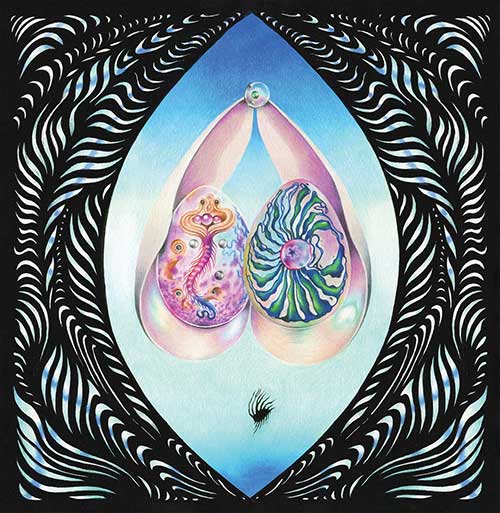
Whilst Roberto Laneri’s Magister Perotinus Meets The Jedi Masters feels like a much simpler approach than most of these other recordings, it surprisingly felt like being most effectively transfixed in pure sound. A concise album, containing 3, near 20-minute-long tracks, built, as the label suggests ‘of little more than subtle acoustic phenomena such as resonance, phasing and interference, the criterion of harmonic convergence’. We have a music that feels like the sound of a cathedral, a still mountain top, but more than anything, a roaring perpetual motion engine fuelled by some abstract power. The sound quickly guides you into a deep and limitless space – a slowly panning shot of galaxies engulfing light years, measurable and collectable in human seconds and minutes.
We’ve long been obsessed by Laneri’s work. He is perhaps best known for 1977’s La Coda Della Tigre with his ensemble Prima Materia and has long been fixated on the power of that most immediate of instruments – the human voice. His work, continually engrossed in how much odd power can come from this source. A simple showcasing of how out our body, our own bodies can take us.
This album draws together a wild combination of references that only combine to make an even more dizzying and beautiful listen. A simple search online to find out more about the unfamiliar names spotlit in the track names – Dydimus’ Dream, the title track – Magister Perotinus Meets The Jedi Masters and the closing Asklepleion.
Which Dydimus is dreaming? Whilst the sleeve notes highlight him as a grammarian and musician active in Rome at the time of Emperor Nero, the name also connects several others – a philosopher, an apostle, a scholar, a writer or music theorist. It seems many Didymus’s all dug deep into the fabric of existence. What might any one of these people who all lived almost 2000 years ago be dreaming about?
Magister Perotinus references the 12th century composer, a member of the Notre Dame school of polyphony. It appears he was also known as Pérotin and is regarded as the first modern composer in the western tradition. The Jedi Masters are the spiritual warriors and guardians, in the imaginary Star Wars universe. Asklepleion is the ancient Greek temple used by Asclepius, the first doctor-demigod who could raise people from the dead.
Without sounding like a joke spoiled by explaining it, all these factors feel like starting points that fan out into an impossibly vast umbrella. Things that colour the layered voices and formless chants, and resultant drones, all of which is Laneri himself, into a stew that attempts to contain all humanity.
Whilst this all might seem like a massive leap, listening to the relatively simple and pared back realities of Magister Perotinus Meets The Jedi Masters, meant this album was an instant, and an ongoing revelation.
After a year that felt like being willingly submerged in the vast and complex music gathered in this summary, the simplicity of this album, an actual solidifying mirage somehow made it inescapable and looped for huge chunks of our time.
Heady and expansive stuff, this is the music that made my brain do cartwheels – it’s our album of 2024.
Magister Perotinus Meets The Jedi Masters by Roberto Laneri here and here

 obladada.com